


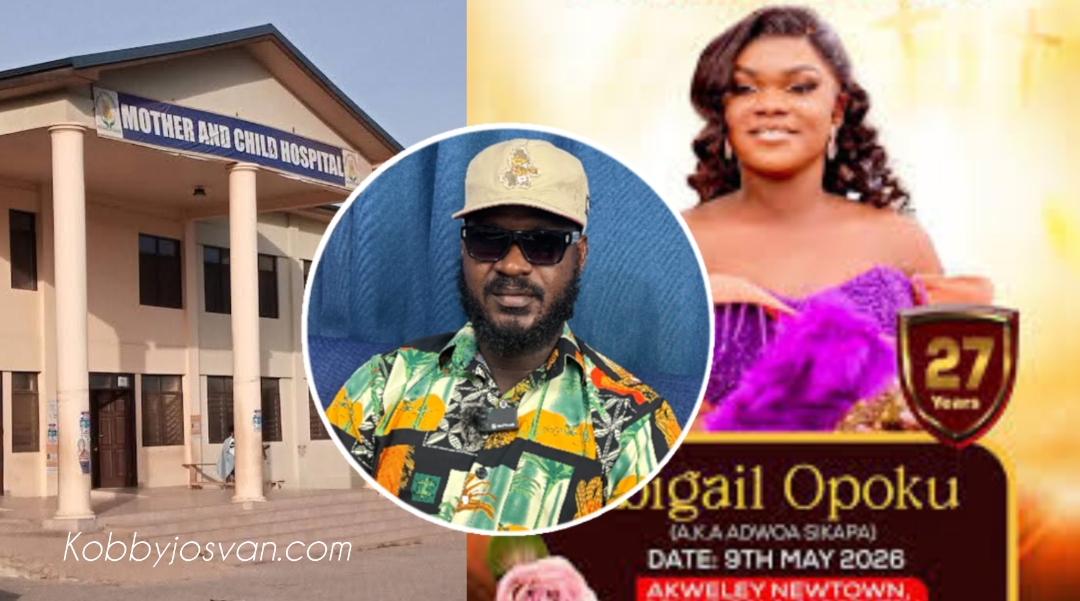
The Awutu Senya East Municipality, with Kasoa as its capital, continues to experience rapid population growth. However, this expansion has not been matched with adequate healthcare infrastructure — and the consequences are becoming increasingly alarming.
This article is not intended to tarnish the image of Kasoa. Rather, it seeks to highlight critical systemic failures that risk defining the municipality if urgent action is not taken.
A Tragedy That Raises Serious Questions
What happened to Abigail is not just a tragic incident — it is a painful reflection of deeper structural problems within our healthcare system.
A young woman, full of life and expecting a child, walked into a hospital seeking care but did not make it out alive. Such an outcome cannot simply be dismissed as “unfortunate.” It raises serious concerns about preparedness, responsiveness, and the capacity of our healthcare facilities to handle emergencies.
An Overburdened Referral System
The Mother and Child Hospital, once envisioned as a critical support center for maternal and child health, now appears to be under immense strain.
Healthcare facilities across Awutu Senya East frequently refer patients there, creating a heavy dependence on a single institution. This centralized pressure has led to overcrowding and operational challenges that compromise the quality of care.
The key questions remain:
1. Are there enough beds to accommodate patients?
2. Are the operating theatres sufficient for emergency procedures?
3. Is the staffing level adequate for a rapidly growing population?
When one facility is expected to serve an entire municipality without proper expansion or support, the system inevitably begins to crack.
A System Under Pressure
This situation is not solely about one hospital — it reflects broader issues within the healthcare delivery system.
Urban growth in Kasoa has been swift, but investment in healthcare infrastructure has lagged behind. Without decentralization and strategic planning, hospitals become overstretched, healthcare workers overwhelmed, and patients put at risk.
Running a densely populated urban area with limited medical resources is unsustainable and dangerous.
The Need for Accountability and Action
The loss of life in circumstances like these calls for more than sympathy. It demands accountability and immediate intervention.
Health authorities must:
• Expand existing healthcare facilities
• Improve staffing and resource allocation
• Strengthen decentralized care across the municipality
• Invest in additional emergency and surgical infrastructure
These are not long-term ambitions — they are urgent necessities.
The truth may be uncomfortable, but it must be acknowledged: gaps in planning, resource allocation, and system management have real consequences.
If decisive action is not taken, similar tragedies may occur again.
Kasoa deserves a healthcare system that reflects its growth and protects its people. Anything less puts lives at risk.
Reporter: Sadiq Rashid (Mr. Carter)
About The Author


